
How Does Personal Loan Interest Work? Key Facts
Personal loan interest determines your monthly payment and total cost. Learn how APRs work and how to get a lower rate.

By Miles Kensington
When you take out a personal loan, the interest rate is not just a number on a page. It determines how much you pay each month and how much the loan costs in total. Understanding how personal loan interest works can help you compare offers, avoid costly mistakes, and choose a loan that truly fits your budget. This guide breaks down the mechanics of interest, the factors that affect your rate, and the steps you can take to secure a better deal.
The Basics of Personal Loan Interest
Personal loan interest is the fee a lender charges you for borrowing money. It is expressed as an annual percentage rate (APR), which includes both the interest rate and any origination fees or other upfront costs. The APR is the true cost of borrowing because it reflects the total yearly cost of the loan.
Interest on a personal loan is typically calculated using a method called simple interest. Unlike compound interest, which can grow on itself, simple interest is charged only on the principal balance you still owe. This means your monthly payment is split into two parts: one part goes toward paying off the principal, and the other part covers the interest for that month.
Here is a simple formula that lenders use to calculate monthly interest:
- Divide your annual interest rate by 12 to get your monthly interest rate.
- Multiply that monthly rate by your current loan balance.
- The result is the amount of interest you pay that month.
For example, if you have a $10,000 loan with a 10% APR, your monthly interest rate is about 0.833%. In the first month, you would pay roughly $83 in interest. As you make payments and the principal decreases, the interest cost also decreases, which is why your payment schedule is called amortization.
Fixed vs. Variable Interest Rates
Personal loans come in two main rate types: fixed and variable. A fixed rate stays the same for the entire life of the loan. This gives you predictable monthly payments, which can be helpful for budgeting. Most personal loans, especially those for debt consolidation or major purchases, use fixed rates.
A variable rate can change over time based on market conditions, often tied to a benchmark like the prime rate. While variable rates may start lower than fixed rates, they carry risk: if the benchmark rises, your monthly payment will increase. For borrowers who prefer stability, a fixed-rate loan is usually safer.
When you compare loan offers, always look at the APR, not just the nominal interest rate. The APR includes fees, so it gives you a more accurate picture of what you will pay. For example, a loan with a 9% interest rate and a 3% origination fee may have an APR of 11%, which is higher than a loan with a 10% rate and no fees.
Factors That Affect Your Interest Rate
Lenders determine your interest rate based on several factors. Some are within your control, while others are not. Here are the most important ones:
- Credit score: Your credit score is the biggest factor. Higher scores usually qualify for lower rates because lenders see you as a lower risk.
- Income and employment: Lenders want to see stable income and a steady job. This reassures them that you can make payments on time.
- Debt-to-income ratio (DTI): This is your monthly debt payments divided by your gross monthly income. A lower DTI shows you have room in your budget for a new loan.
- Loan amount and term: Larger loans and longer terms can come with higher rates because they represent more risk and a longer repayment period.
- Lender policies: Each lender has its own risk model and rate ranges. That is why shopping around is so important.
If your credit is less than perfect, you may still qualify for a personal loan, but you will likely pay a higher interest rate. Some lenders specialize in loans for borrowers with poor credit, and online comparison services like FreeQuotes.Loans can help you find those offers without damaging your credit score.
How APR Affects Your Monthly Payment
The APR directly influences your monthly payment. A higher APR means a larger portion of your payment goes toward interest, leaving less to reduce the principal. Over the life of the loan, this can add up to thousands of dollars in extra cost.
Consider two loans for $15,000 with a 36-month term. One has a 10% APR, the other has a 15% APR. The monthly payment for the 10% loan is about $484, and the total interest paid is roughly $2,414. The 15% loan has a monthly payment of about $520, and the total interest is around $3,718. That is a difference of more than $1,300, even though the APR difference is only 5 percentage points.
This example shows why it pays to compare offers. A small difference in APR can have a big impact on your budget. When you use a service like FreeQuotes.Loans, you can receive multiple offers from different lenders and compare them side by side. This helps you find the lowest APR you qualify for.
Understanding Loan Terms and Amortization
Loan term is the length of time you have to repay the loan. Common terms are 12, 24, 36, 48, and 60 months. A longer term means lower monthly payments, but you will pay more interest over time because the principal is paid down more slowly.
Amortization is the process of spreading out a loan into fixed payments. Each payment is the same amount, but the mix of interest and principal changes over time. Early in the loan, most of your payment goes toward interest. As the balance decreases, more of your payment goes toward principal. This is why paying off a loan early can save you money, but you should check if your lender charges a prepayment penalty.
Some lenders charge a prepayment penalty if you pay off your loan before the term ends. This fee is designed to compensate the lender for the interest they would have earned. Before you sign, ask about prepayment penalties. If the lender charges one, you may want to look for a different loan with no such fee.
Origination Fees and Other Costs
In addition to interest, personal loans can come with origination fees. This is a one-time fee that the lender charges to process your application. It is usually a percentage of the loan amount, often between 1% and 6%. The fee is typically deducted from the loan proceeds, so you receive less than the full amount you borrowed.
For example, if you take a $10,000 loan with a 5% origination fee, you will receive $9,500, but you will still owe $10,000 plus interest. That raises your effective cost of borrowing. The APR calculation includes these fees, which is why comparing APRs is so important.
Other potential costs include late payment fees, returned check fees, and fees for requesting a payoff statement. Some lenders may also charge a fee for processing paper statements instead of online statements. Always read the loan agreement carefully and ask about any fees that are not clear.
How to Lower Your Personal Loan Interest Rate
You are not stuck with the first rate you are offered. There are several strategies you can use to get a lower interest rate on a personal loan.
- Improve your credit score: Before you apply, check your credit report for errors and pay down high credit card balances. Even a small improvement in your score can lead to a lower rate.
- Add a co-signer: If you have a friend or family member with good credit, they can co-sign the loan. This reduces the lender's risk and can lower your APR.
- Choose a shorter term: Shorter loans often come with lower rates because you repay the balance faster. Just make sure you can afford the higher monthly payment.
- Opt for secured loans: Some lenders offer secured personal loans that are backed by collateral, such as a car or savings account. These loans usually have lower APRs than unsecured loans.
- Shop around: Different lenders have different rates. Use a comparison service like FreeQuotes.Loans to get multiple offers at once. This can save you time and help you find the best deal.
Another option is to consider a credit union. Credit unions are not-for-profit organizations, and they often offer lower rates to their members. If you belong to a credit union, check their personal loan rates before you apply elsewhere.
The Role of the Loan Comparison Service
FreeQuotes.Loans is not a direct lender, but it plays a valuable role in the loan shopping process. When you submit a single request form, the service connects you with multiple third-party lenders who can offer you personalized quotes. This can save you hours of research and application time, and it does not cost you anything.
The service is especially helpful for borrowers with less-than-perfect credit. Many direct lenders have strict minimum credit score requirements, but the network of lenders on FreeQuotes.Loans includes those who are willing to work with borrowers who have past financial challenges. You can receive offers even if you have had a bankruptcy or a repossession, as long as you have a stable income.
With loan amounts ranging from $100 to $50,000, you can find a loan that fits your needs, whether you need a small payday loan for a utility bill or a larger personal loan for a major repair. The application process is online and takes only a few minutes, and you may receive funds as soon as the next business day.
How Interest Is Paid Back Over Time
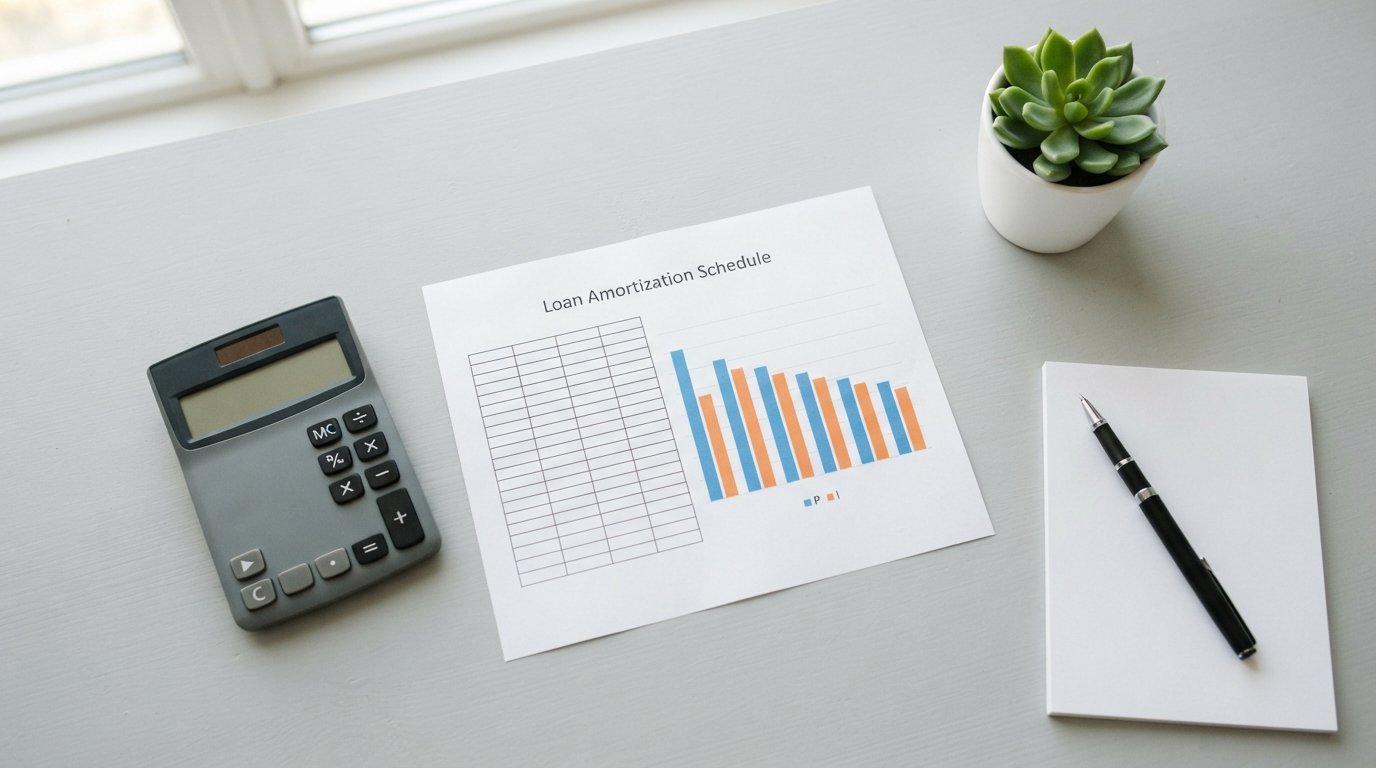
Understanding how interest is paid back over time can help you make smarter decisions about your loan. When you receive your amortization schedule, you will see the breakdown of each payment. The schedule shows how much of each payment goes toward interest and how much goes toward principal.
In the early months, the interest portion is high because the balance is large. As you make payments, the balance decreases, so the interest portion shrinks. This means that if you make extra payments toward the principal, you can reduce the total interest you pay and shorten the life of the loan.
For example, if you have a $20,000 loan at 12% APR for 48 months, your monthly payment is about $527. If you pay an extra $50 each month, you will pay off the loan about 8 months early and save more than $600 in interest. This is a simple way to reduce the cost of borrowing.
Before you make extra payments, confirm that your lender allows it without a penalty. Most personal loans do not have prepayment penalties, but it is always wise to check the terms of your agreement.
Final Thoughts
Personal loan interest is more than just a rate. It is a complex calculation that affects your monthly budget and the total cost of your loan. By understanding how interest works, what factors influence your rate, and how to compare offers, you can make a confident choice that supports your financial health.
Take the time to shop around, compare APRs, and read the fine print. A small effort now can save you hundreds or even thousands of dollars over the life of the loan. And if you are ready to start the process, consider using a free service like FreeQuotes.Loans to get multiple quotes in one place. It is a smart, low-pressure way to find a loan that fits your needs.